
ATM Testing - April 28, 2026
Modern ATMs are no longer simple cash dispensers. Advanced Function ATMs now operate as software platforms at the edge, integrating cash recyclers, deposit imaging, biometrics, fraud services, contactless kernels, and network-driven logic through CEN/XFS services.
As this complexity has grown, a subtle but critical issue has emerged: XFS fragmentation.
What was once a manageable development concern has become a deployment and operational risk, especially for large North American ATM fleets running mixed hardware, multiple middleware stacks, and varying XFS versions.
What is XFS Fragmentation?
XFS fragmentation occurs when an ATM estate contains:
- Multiple CEN/XFS versions
- Vendor-specific XFS extensions
- Different OEM hardware combinations
- Peripheral firmware and driver mismatches
- Inconsistent service behavior across environments
In Advanced Function environments, these differences matter because ATMs are stateless at the application level. Business logic depends on the real-time behavior of XFS services, not predefined states and screens.
A small change in one service, such as a recycler, deposit module, or card reader, can have unintended downstream effects across the entire transaction flow.
Why XFS Fragmentation is More Dangerous in 2026
Several forces are amplifying the impact of fragmentation:
Fleet Modernization Without Peripheral Replacement - many institutions are refreshing operating systems and middleware while retaining older peripherals. The result is a hybrid service matrix that rarely matches lab assumptions.
Advanced Function Growth - deposits, recycling, assisted service, and personalization all rely on tightly coordinated XFS services. Fragmentation increases the probability of workflow-level failures, not just device errors.
Late Stage Failure Discovery - traditional test environments often fail to represent the exact XFS service combinations found in production. Issues surface during UAT or pilot, when fixes are slow, visible, and costly.
In short, fragmentation doesn't simply slow down development; it threatens delivery timelines, service availability, and operational confidence.
Why Traditional Testing Falls Short
In reality, production fleets contain dozens or even hundreds of service variations. It is very difficult for traditional lab testing models to scale appropriately in order to represent this diversity, and manual testing alone can no longer keep pace with OS updates, middleware changes, and compliance events.
This is where many ATM deployments run into trouble, not because the application logic is wrong, but because the service behavior was never truly tested.
How VirtualATM Addresses XFS Fragmentation
Paragon’s VirtualATM platform is purpose-built to address this problem by shifting testing from hardware-dependent assumptions to service-level realism.
Virtualized XFS Services
VirtualATM simulates real XFS services, cash handling, deposits, card readers, PIN pads, and more, allowing teams to test against production-like service behavior without depending on the availability of physical devices.
This makes it possible to validate:
- Mixed XFS versions
- Vendor-specific extensions
- Peripheral behavior differences
- Error conditions that are difficult to reproduce in labs
Service Level and Workflow Testing
Rather than testing isolated messages, VirtualATM enables end-to-end workflow validation across interacting services. Teams can observe how changes in one XFS service affect downstream flows before deployment.
Scalable Regression Across Variants
Virtual environments allow deployers to test multiple configurations in parallel, dramatically increasing coverage without expanding hardware labs.
This is critical when rolling out:
- OS updates
- Middleware upgrades
- Peripheral firmware changes
- New advanced function features
It’s Time for a Strategic Shift: Testing What You Actually Run
One of the most important benefits of VirtualATM is not testing speed, it’s testing fidelity.
Advanced Function ATM deployers no longer need to guess whether their test environment matches production. They can model the real XFS service matrix found in the field and validate behavior before issues reach pilots or customers.
This transforms XFS fragmentation from an unpredictable risk into a manageable engineering variable.
The Bottom Line for Advanced Function ATM Deployers
XFS fragmentation is no longer just a developer inconvenience. It is a deployment-level risk that can:
- Delay rollouts
- Trigger operational exceptions
- Increase InfoSec and compliance escalations
- Undermine confidence in advanced function features
By using VirtualATM to virtualize XFS services, automate regression testing, and validate real-world service interactions, deployers can:
- Detect fragmentation-related issues earlier
- Reduce reliance on scarce physical hardware
- Scale testing without scaling manpower
- Deliver advanced function features with confidence
In a world where ATMs are software platforms, testing the service layer is no longer optional; it’s essential.

FAQs
What is XFS fragmentation?
XFS fragmentation occurs when different ATMs in a fleet use varying XFS versions, vendor extensions, peripherals, or middleware stacks, leading to inconsistent service behavior and unexpected failures.
Why is this especially risky for Advanced Function ATMs?
Advanced Function ATMs rely on real-time XFS service interactions rather than predefined states and screens. Small service inconsistencies can break entire workflows.
How does VirtualATM help reduce this risk?
VirtualATM simulates real XFS services and workflows, allowing teams to test production like behavior across many configurations without relying on physical devices.
Is this about configuration files or states-and-screens?
No. XFS fragmentation is a service level and integration problem. VirtualATM is designed for stateless, Advanced Function ATM environments, not traditional states-and-screens configuration management.
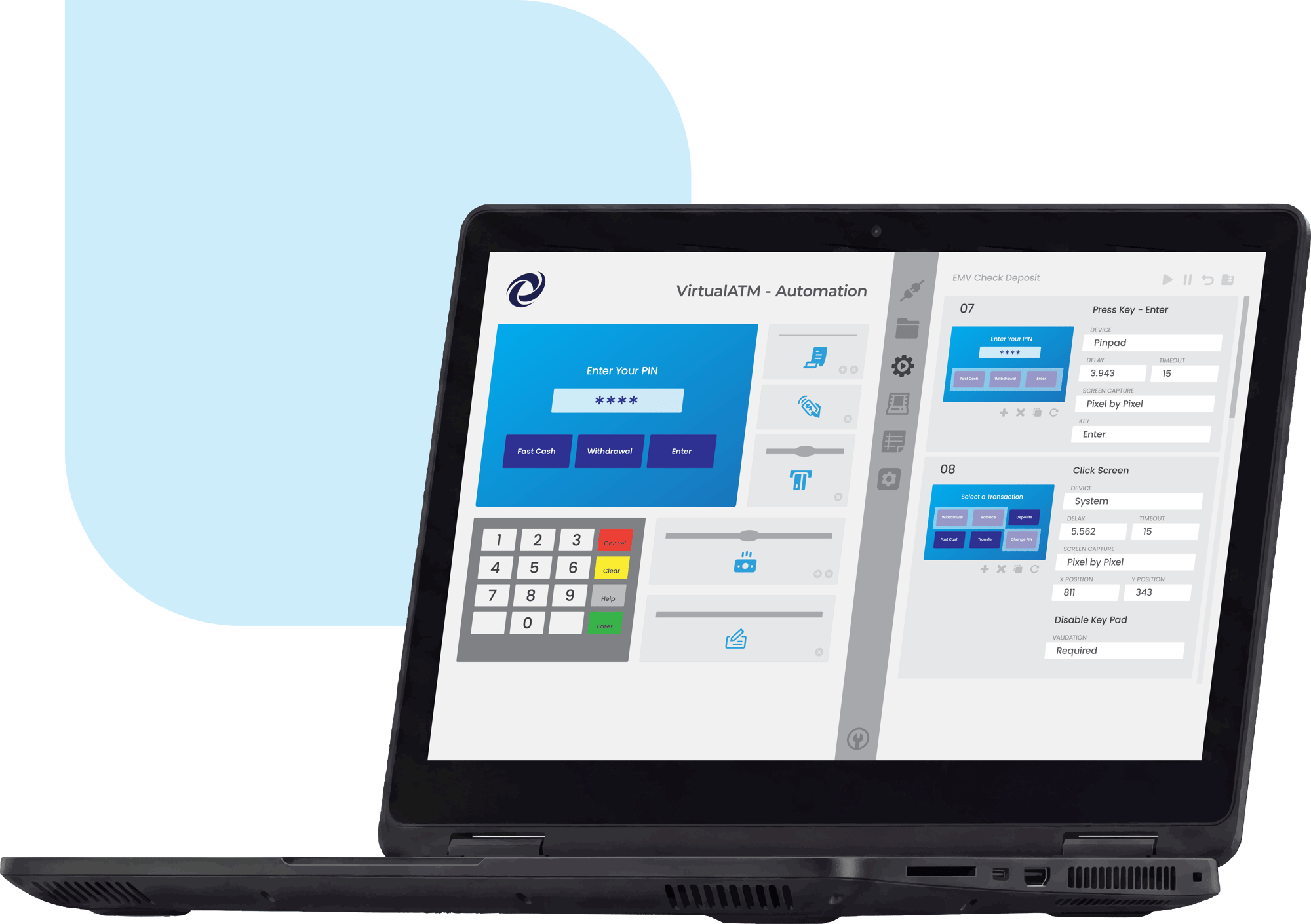
A Guide to ATM Testing
In this guide, we explore a number of issues and challenges associated with the continued reliance on manual ATM testing and provide information and advice on how to use virtualization technology to automate and streamline the ATM testing process.