
ATM Testing - April 9, 2026

Modern ATMs have evolved far past their original role as simple cash dispensers; they have become full-fledged financial services centers. Today’s machines easily process deposits with image capture, real-time fraud checks, personalized offers, and teller-assisted service interactions, all while interacting with multiple systems simultaneously. Core banking, fraud monitoring, imaging, and payment networks may be involved in any particular transaction, making ATM transaction flows far more complex than in the past.
Despite this complexity, many ATM deployers continue to test transactions manually or in isolation, validating only single events rather than full end-to-end transaction flows. This cumbersome and time-consuming approach can leave errors undetected until they impact operations, creating operational delays, InfoSec exceptions, and customer service issues.
In today’s dynamic marketplace, end-to-end testing is essential to ensure that each transaction, personalization, and fraud check works seamlessly across all integrated systems. Platform-level validation ensures that advanced ATM features deliver the intended benefits while reducing delivery timeframes, minimizing defects, and maintaining consistent operations.
By validating end-to-end processing across the entire ATM ecosystem, teams can more easily identify and correct issues to keep the fleet running smoothly and avoid embarrassing customer satisfaction issues.
Key Takeaways
- Traditional ATM testing is slow, cumbersome, and often error-prone - validating single transactions in isolation, which can miss the issues that surface when processing transactions across multiple, integrated systems.
- End-to-end, and automated platform-level testing replicates full ATM transaction flows, including EMV transaction security, fraud checks, CRM personalization, and assisted services, much more quickly and easily, helping to identify and correct issues before they impact operations or consumers.
- Virtualization and automated technologies facilitate end-to-end testing that speeds up delivery cycles, reduces troubleshooting time, prevents operational disruptions, and improves deployment reliability.
- Tools like Paragon VirtualATM enable teams to more quickly and easily test complex processing scenarios, including simulated device faults, in order to maintain more reliable ATM operations.
Why Traditional Testing Falls Short
Many ATM teams still rely on manual point-in-time validation methods designed for simple cash dispensers. Testing single deposits or withdrawals in isolation does not account for the complex interactions between core banking systems, fraud detection, imaging, and payment networks.
A transaction may appear successful on its own, while the full workflow, including CRM-driven personalization or assisted service steps, fails.
This gap leads to longer cycle times to diagnose issues and increases operational overhead. Teams spend more time troubleshooting errors and managing exceptions, slowing the deployment of updates and adding unnecessary operational risk.
The Platform-Level Testing Approach
End-to-end testing treats each ATM as an integrated platform rather than a collection of discrete components. This approach validates complete transaction flows across all connected systems, including EMV contact and contactless processing, fraud monitoring, and personalized customer experiences.
Key elements of platform-level testing include end-to-end simulation and validation of real-world transaction flows, virtual sandbox environments to safely test updates, and scenario-based testing that mirrors real consumer behaviour.
Testing automation quickly and accurately ensures multiple systems operate together correctly, giving teams confidence that new product updates, software releases, or security patches don’t introduce errors or issues.
Adopting an end-to-end platform-level approach to testing streamlines validation, reduces operational risk, and ensures that advanced ATM features perform as intended across every use case.
How VirtualATM Helps Teams
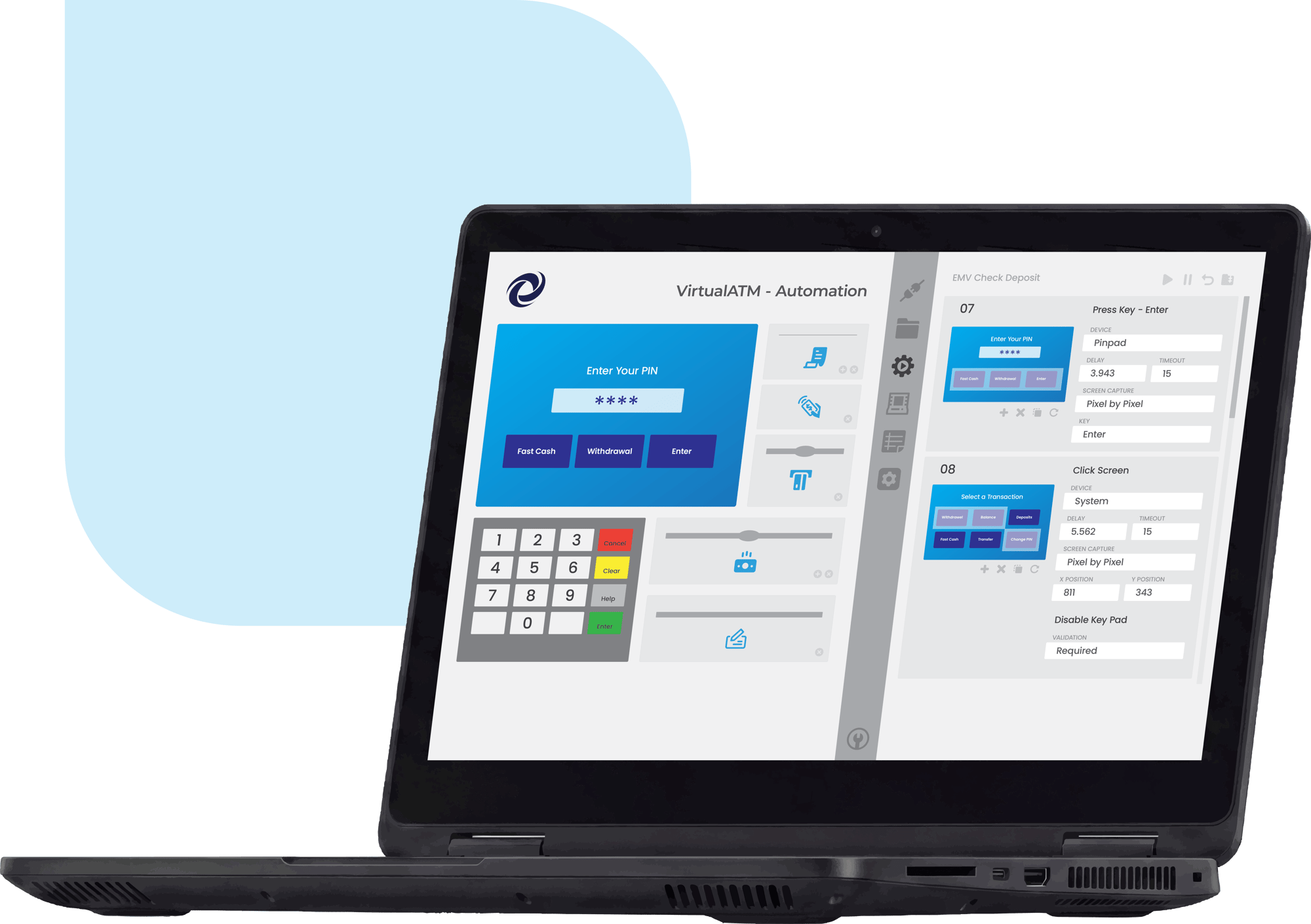
The Paragon VirtualATM platform provides a centrally-managed and controlled environment that is accessible and available 24/7 to simulate ATM transactions and workflows. By simulating real-world activity across the entire ATM ecosystem, teams can quickly and easily test complex use cases to help optimize ATM testing operations.
VirtualATM allows teams to maintain consistent screen flows, validate multiple updates together, and catch defects before they reach production. It also reduces troubleshooting time, speeding up delivery cycles, helping to ensure deployment reliability and fleet availability.
By leveraging VirtualATM, ATM teams can focus on strategic improvements instead of manual testing, helping ATM fleets remain efficient, compliant, and operating at peak efficiency.

FAQs
1. Why is testing modern ATMs like traditional cash dispensers no longer sufficient?
Modern ATMs are software-driven platforms with multiple integrated features such as deposits with image capture, fraud detection, CRM personalization, and assisted services. Testing single transactions in isolation can miss defects that only surface during end-to-end testing scenarios.
2. What are the risks of not performing end-to-end testing?
Ignoring the importance of full platform-level testing can lead to operational delays, increased troubleshooting time, and negative impacts on customer experience.
3. What does platform testing involve?
End-to-end testing provides full execution of transaction flows, validation of cross-system connectivity, as well as automated orchestration to ensure that all integrated components and systems work together seamlessly.
4. How does end-to-end testing improve ATM operations?
By rapidly and consistently validating complete workflows rather than individual transactions, teams can detect errors and defects faster and earlier in the development cycle, maintaining consistent ATM operations, and delivering superior customer service with every transaction.
A Guide to ATM Testing
In this guide, we explore a number of issues and challenges associated with the continued reliance on manual ATM testing and provide information and advice on how to use virtualization technology to automate and streamline the ATM testing process.