
ATM Testing - April 28, 2026

The global payment industry is currently being inundated by attention-grabbing headlines regarding AI-powered everything, real-time payments, and seamless omnichannel commerce. In this look-at-what-I-can-do-today environment, it's easy to neglect one of the unsung heroes of global finance: the lowly Automated Teller Machine.
After more than 50 years, the ATM remains a critically important customer engagement channel for banks and financial services companies across all corners of the globe. In fact, even though ATM growth has leveled off or declined in some developed countries, deployments continue to grow significantly in a number of emerging markets.
Including a significant percentage of the new machines being installed, many ATMs operating in the field still adhere to the traditional states-and-screens ATM architectural model - a foundational design where a remote host system dictates customer interactions with the ATM via a predefined configuration file.
This file outlines a sequence of "states" (such as card insertion, PIN entry, or transaction selection) paired with corresponding "screens" (the visual prompts displayed to the user), ensuring a structured, predictable transaction flow.
Born in the early days of ATM deployment in the 1970s and 1980s, this model was revolutionary for its simplicity and reliability, allowing banks to scale self-service machines without the complexity of real-time processing.
Today, while event-driven, advanced-function ATMs dominate mature markets like North America and Western Europe, state-and-screen systems remain the backbone in resource-constrained environments. According to recent industry data, over 2.9 million ATMs are installed globally, with more than half in emerging markets where cash remains king.
In regions like Asia-Pacific, Eastern Europe, and Africa, ATM deployments are not just holding steady—they're growing, driven by financial inclusion initiatives that prioritize affordability over cutting-edge features.
Unfortunately, the traditional method of creating and updating these ATM configuration files - often through a painstaking manual effort involving a detailed text editing exercise – persists in many organization. While it is an absolute requirement to build the configuration files that drive the ATMs, it is a labor-intensive and error-prone process that can cause a significant bottleneck for operators who manage hundreds or even thousands of machines.
The Challenge of Manual Configuration
Imagine a team of ATM specialists spending their precious time and effort to manually code each state transition and screen reference for a new promotional campaign or regulatory update. One misplaced state or screen parameter can cause significant customer satisfaction issues or even render an ATM unusable.
Manual configuration of ATM load files (the bundled packages that include states, screens, and supporting assets) frequently leads to:
- Undefined screens that result in failed transactions: A missing or incorrectly referenced screen might leave users staring at a blank display mid-transaction, leading to aborted sessions and frustrated customers.
- Invalid references that disrupt customer journeys: Cross-references between states—if mistyped—can create dead ends in the transaction flow, such as jumping from PIN entry directly to a withdrawal confirmation without balance checks.
- Costly rework cycles and operational downtime: Debugging requires physical access to ATMs, halting operations across a network and incurring technician visits that can cost thousands per incident.
For banks and independent ATM deployers (IADs), these pain points compound into real-world headaches. Deployment timelines stretch from days to weeks, operational costs balloon due to unplanned maintenance, and user satisfaction dips as unreliable experiences erode customer trust.
With over $13.6 trillion in cash withdrawals processed globally via ATMs in 2025, even minor disruptions can translate to significant revenue loss. Emerging markets, where ATM growth is still accelerating (with projections showing a 4.54% CAGR in the global ATM market through 2035, largely fueled by these regions), amplify the stakes, with every machine acting as a lifeline for unbanked populations, and where downtime isn't just annoying, it is a barrier to economic participation.
A Modern Solution for a Persistent Need
Enter Paragon Application Systems' ConfigBuilder 5 (CB5), the latest evolution of a toolset pioneered over 30 years ago to tame the chaos of manual ATM configuration.
Building on the strong legacy of its predecessors that revolutionized desktop-based load file creation for states-and-screens ATMs, CB5 brings a fresh, intuitive interface powered by modern technologies and contemporary design principles.
At its core, CB5 empowers operators to build, test, and deploy configurations from a single desktop environment, reducing the manual effort required to create and manage the configuration files and improving their quality. Key features include:
- Visual design tools for intuitive state and screen creation: A drag-and-drop interface lets users map out transaction flows with thumbnails of screens, making the process accessible even for non-coders. Every step in a transaction can be documented visually to ensure nothing falls through the cracks.
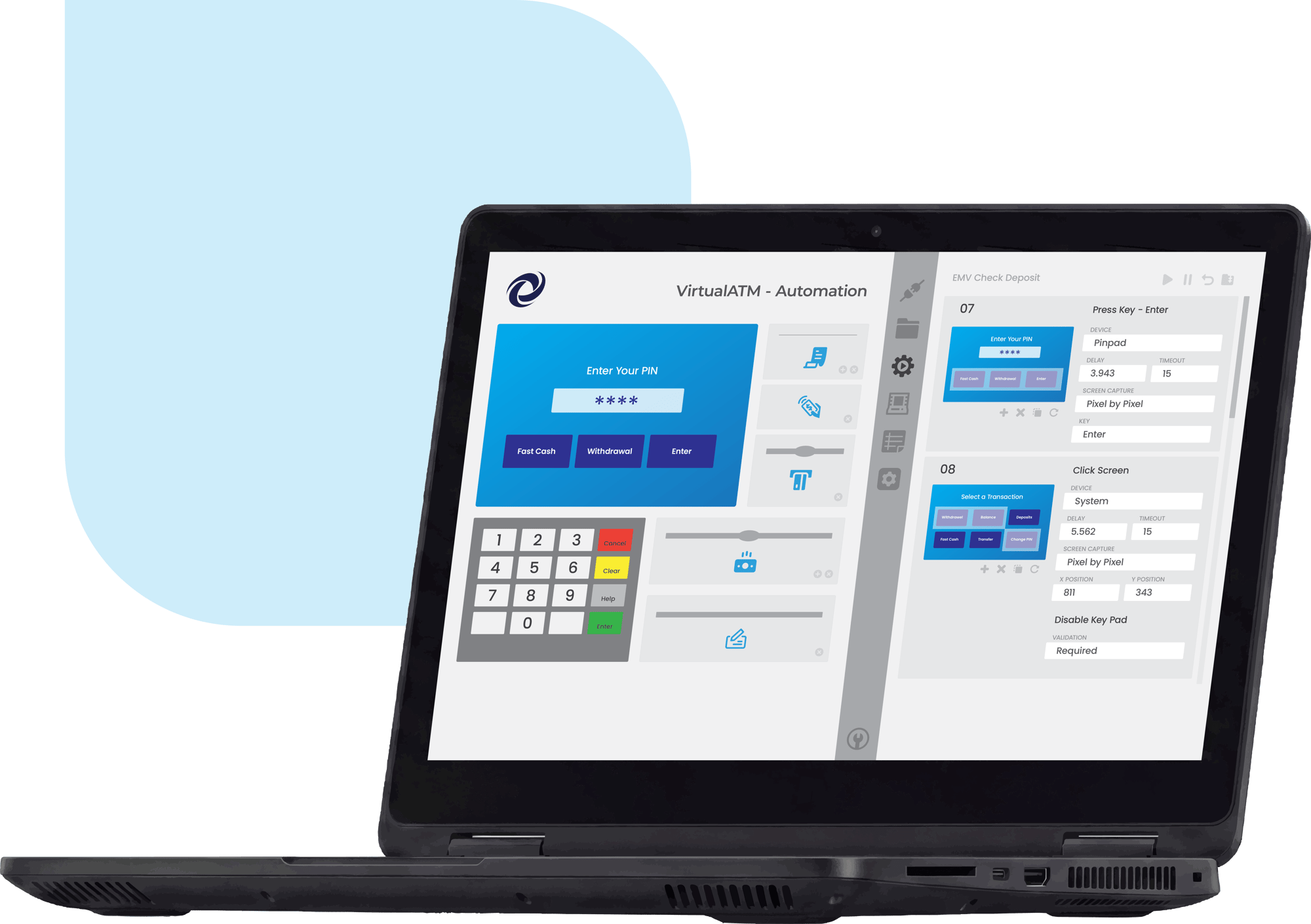
- Preview customer journeys before deployment: When used in conjunction with Paragon’s VirtualATM solution, you’ll be able to run end-to-end simulations right on your PC.
- Operational Accuracy: Verification of the states and screens reduces downtime by catching errors early - before they can impact production systems.
- CB5's versatility shines in its broad compatibility: it supports ATMs that run or emulate NCR NDC Plus or Diebold Nixdorf D912 message formats, ensuring seamless management of mixed fleets.
Whether you're updating a single machine in a rural outpost or rolling out changes across 1,000+ units, CB5 delivers consistency and precision that manual file creation simply can't match.
Aligning with Modern Customer Expectations
Customers today, regardless of whether they're in a bustling Mumbai market or a quiet Latin American village, demand more from their banking touchpoints. Even in rigid states-and-screens setups, expectations include EMV chip card support for secure transactions, multilingual interfaces for diverse populations, accessibility features like audio cues for the visually impaired, and dynamic branding to reinforce trust through consistent visuals and messaging.
CB5 bridges this gap by embedding modern capabilities into legacy workflows:
- Easily incorporate audio, high-contrast modes, and voice-guided navigation to meet global standards like the Americans with Disabilities Act (ADA).
- Swap images, fonts, and languages with point-and-click simplicity, supporting everything from local dialects to seasonal promotions.
- Embed video snippets to enrich the user experience, layer in audio prompts, and handle multimedia assets.
These enhancements ensure that even older ATMs feel fresh and inclusive, turning potential liabilities into competitive assets.
Why This Matters for Emerging Markets
In emerging economies - from Africa’s rapid urbanization to Indonesia's island-hopping financial inclusion drives - states-and-screens ATMs are more than relics; they're essential tools for bridging the digital divide.
With 73% of populations in markets like India and Brazil relying on monthly ATM access, and new deployments surging in places like Uzbekistan (over 1,000 units added in 2025 alone), growth is outpacing developed regions. Here, advanced ATMs are often cost-prohibitive due to infrastructure limits and high upfront investments, making affordable, reliable legacy models the go-to choice.
CB5 directly addresses these markets' unique pressures:
- Reduces errors and downtime: Proactive verification cuts failure rates by up to 80%, per user testimonials, keeping machines humming 24/7 in areas with limited service coverage.
- Accelerates ATM deployments: From concept to deployment in hours instead of days or weeks, enabling rapid scaling for national rollout programs.
- Maintains compliance and branding consistency: Built-in tools ensure adherence to local regulations (e.g., multilingual mandates) and corporate identities, fostering trust in nascent banking ecosystems.
By streamlining the process of building and managing the ATM configuration files, CB5 not only boosts efficiency but also amplifies ATMs' role in financial inclusion, helping operators serve the unbanked - without breaking the bank.
Modernize Your ATM Configuration Capabilities
Legacy ATM architectures like states-and-screens aren't fading into obscurity—they're evolving to meet tomorrow's demands, especially in the world's fastest-growing economies. But clinging to manual processes to build the ATM config files? That's a choice that rewards inefficiency and introduces risk.
With ConfigBuilder 5, ATM operators unlock a secure, user-friendly platform that's as forward-thinking as it is practical. Streamline your testing workflows, delight your customers, and future-proof your fleet—because in banking, reliability isn't optional; it's everything.
Ready to simplify your ATM testing operations? Contact Paragon Application Systems to arrange a demo of ConfigBuilder 5 and see the difference for yourself.

A Guide to ATM Testing
In this guide, we explore a number of issues and challenges associated with the continued reliance on manual ATM testing and provide information and advice on how to use virtualization technology to automate and streamline the ATM testing process.