

The global payments landscape is entering 2026 with no shortage of bold predictions, flashy buzzwords, and breathless headlines.
Everywhere you look, the conversation is dominated by AI-driven personalization, invisible payments, embedded finance, and the promise of a fully cashless future. From buy-now-pay-later evolution to real-time cross-border rails and biometric authentication, innovation is accelerating at a pace that would have seemed impossible just a decade ago.
Yet, beneath the noise of “what’s next,” a quieter and more consequential transformation is unfolding, one that balances cutting-edge innovation with the realities of global infrastructure, regulation, and consumer behavior. As payment ecosystems mature and expand into new markets, 2026 will be defined not just by novelty, but by pragmatism: solutions that scale, integrate with legacy systems, and deliver security and resiliency where it matters most.
For banks, fintechs, and payment technology providers, the challenge is clear: how do you embrace emerging payment trends without leaving behind the foundational systems that still power daily commerce for billions of people?
Key Takeaways
-
Payment trends in 2026 favor practicality over hype: Scalable, secure solutions matter more than novelty.
-
Real-time payments are expanding globally: Interoperability and legacy system integration are critical.
-
Embedded finance is becoming invisible: Reliability and risk controls must operate seamlessly in the background.
-
AI is now embedded in payment operations: Accuracy and configuration quality directly impact outcomes.
-
Financial inclusion drives hybrid payment models: Digital and physical channels must coexist.
-
Resilient infrastructure is a strategic priority: Downtime and misconfiguration carry growing economic risk.
The Payments Industry at an Inflection Point
By 2026, global digital payment transaction volumes are projected to exceed $20 trillion annually, driven by mobile wallets, account-to-account transfers, and real-time payment networks. Governments and regulators are pushing for faster, more transparent systems, while consumers expect frictionless experiences across every channel – mobile, online, and physical.
At the same time, cash usage remains stubbornly resilient. In emerging markets across Asia, Africa, Eastern Europe, and Latin America, cash continues to underpin everyday economic activity, accounting for a significant share of point-of-sale transactions despite the growth in digital payments.
Even in developed economies, cash is far from obsolete. Countries like Japan still see over half of point-of-sale transactions conducted with cash, and households often keep physical money as a trusted fallback during outages, natural disasters, or periods of financial uncertainty.
This dual reality, hyper-digital innovation alongside enduring physical payment channels, sets the stage for the most important payment trends shaping 2026.
Trend 1: Real-Time Payments go Truly Global
Real-time payments (RTP) have moved beyond early adoption and into global expansion. By 2026, more than 80 countries are expected to operate some form of instant payment scheme, enabling funds to move in seconds rather than days.
What’s changing is interoperability. The next wave of RTP focuses on linking domestic schemes together, unlocking faster cross-border payments for remittances, trade, and gig-economy workers. These systems must coexist with legacy banking infrastructure, including ATM networks that still serve as critical cash-in/cash-out points.
For financial institutions, success in this environment depends on flexible systems that can integrate new rails without disrupting existing, operational channels.
Trend 2: Embedded Finance Becomes Invisible Finance
Embedded finance, payments woven directly into non-financial platforms, will mature significantly in 2026. Consumers won’t think about “making a payment”; it will simply happen in the background of everyday activities like transportation, retail, healthcare, and government services.
But invisibility increases risk. Fraud detection, compliance, and customer authentication must work flawlessly behind the scenes. This places renewed emphasis on robust testing, validation, and configuration across all payment touchpoints, from mobile apps to self-service terminals.
Reliability becomes the differentiator, not novelty.
Trend 3: AI Moves from Experimentation to Operations
AI is no longer a pilot project, it’s operational. In 2026, AI will be deeply embedded in payment systems for fraud prevention, transaction routing, customer support, and personalization.
However, AI-driven decisioning is only as good as the systems it connects to. Legacy platforms, including traditional payment processing and ATM architectures, must be configured correctly to ensure consistent behavior, regulatory compliance, and predictable customer experiences. Automation doesn’t eliminate the need for precision, it amplifies it.
Trend 4: Financial Inclusion Shapes Payment Design
One of the most important payment trends in 2026 is the renewed focus on financial inclusion. Governments and central banks are investing heavily in infrastructure that reaches unbanked and underbanked populations, particularly in emerging economies.
In these regions, affordability, uptime, and simplicity matter more than bleeding-edge features. ATMs, agent-assisted terminals, and hybrid digital-physical models remain essential. Payment innovation here is about extending access, not replacing existing systems wholesale.
This is where modern tools applied to legacy architectures make the biggest impact.
Trend 5: Resilient Infrastructure Beats Shiny Interfaces
As payment volumes grow, so does the cost of failure. Outages, misconfigurations, and inconsistent customer journeys can ripple across entire economies. In 2026, payment system resilience is no longer a back-office concern, it’s a strategic priority.
Financial institutions are investing in better payment systems, simulation tools, and configuration management to ensure that changes can be deployed quickly and safely. Whether supporting instant payments, EMV upgrades, multilingual interfaces, or regulatory updates, the ability to validate before deployment is critical.
Where Paragon Application Systems Fits in
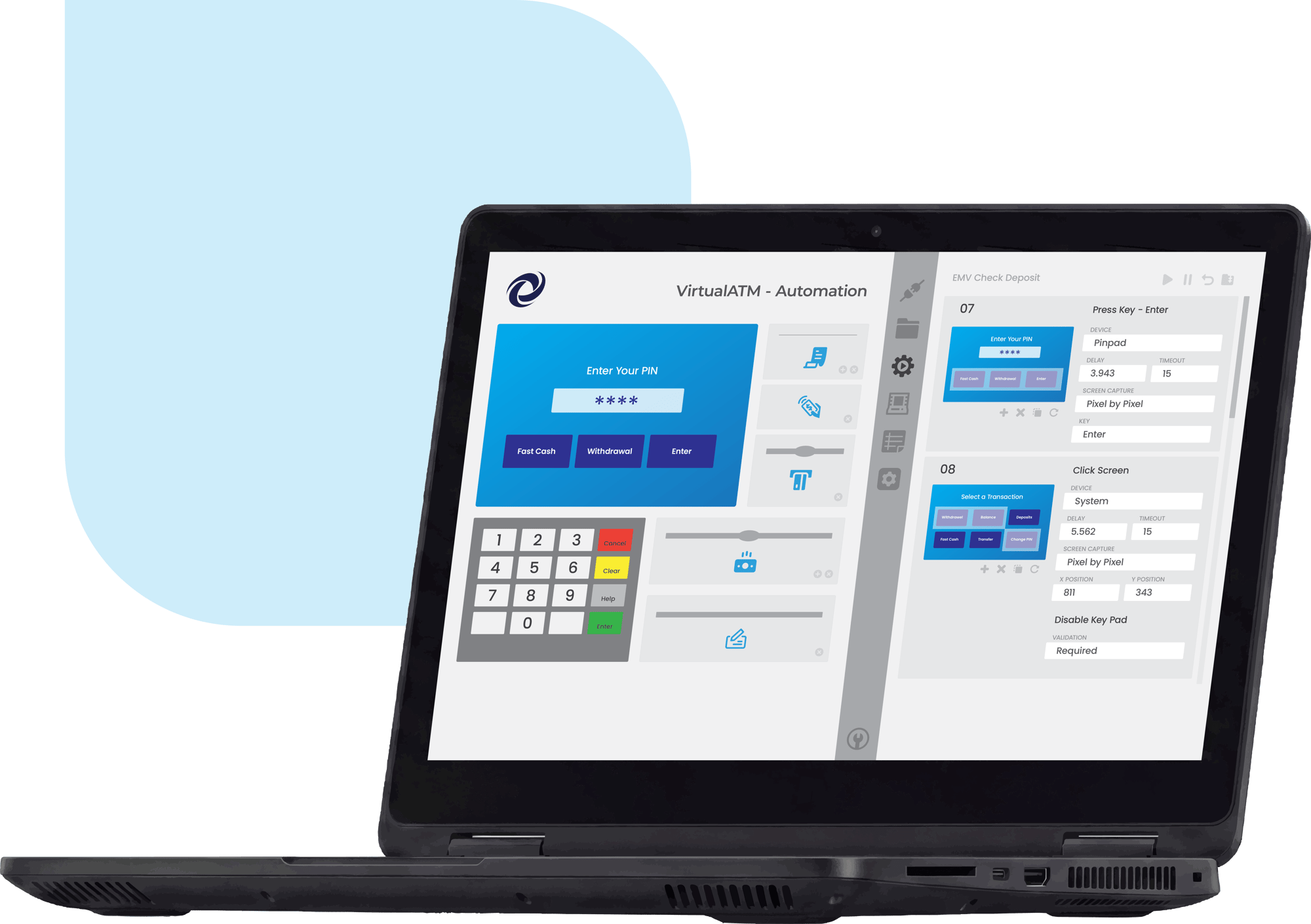
At Paragon Application Systems, we’ve spent decades working at the intersection of reliability and innovation. As emerging payment trends reshape the industry, one truth remains constant: complex payment ecosystems require disciplined configuration, testing, and validation.
Whether supporting legacy message formats, traditional states-and-screens ATM environments or enabling modernization initiatives that improve accessibility, compliance, and customer experience, Paragon’s tools help institutions adapt without introducing unnecessary risk. In a world racing headlong into 2026, the winners won’t be those who chase every trend, but those who implement change thoughtfully, efficiently, and at scale.
Looking Ahead to 2026 & Beyond
The future of payments isn’t purely digital, purely cashless, or purely automated. It's a hybrid. It’s inclusive. And it’s built on a foundation of systems that must work every time, everywhere.
As emerging payment trends redefine expectations in 2026, financial institutions that balance innovation with operational excellence will lead the way. The technology may evolve, but the mission remains the same: deliver secure, reliable, and accessible payments, no matter where or how customers choose to transact.
Ready to prepare your payment infrastructure for what’s next? The team at Paragon is here to help you navigate the future with confidence.

Frequently Asked Questions (FAQs)
1. What are the most important emerging payment trends in 2026?
Key payment trends in 2026 include global expansion of real-time payments, invisible embedded finance, operational AI in payments, renewed focus on financial inclusion, and greater investment in resilient payment infrastructure.
2. Are real-time payments replacing traditional payment systems?
No. Real-time payments are expanding rapidly, but they must integrate with legacy banking infrastructure, including batch systems and ATM networks, which remain essential for cash access and financial stability.
3. How is AI changing the future of payments?
AI is moving from pilot programs into core operations, supporting fraud detection, transaction routing, and customer engagement. Its effectiveness depends on accurate configuration and reliable underlying systems.
4. Why does cash still matter in a digital payments world?
Cash remains vital in many emerging markets and continues to serve as a trusted fallback in developed economies during outages, emergencies, or financial uncertainty, making hybrid payment ecosystems essential.
5. What should banks and payment providers prioritize in 2026?
Banks and payment providers should prioritize resilient, well-tested payment infrastructure that supports innovation while ensuring security, compliance, and uninterrupted service across both digital and physical channels.
A Guide to ATM Testing